Research & Publications: Our 2025 Interns in Print
At the heart of the LIgHT-HEALS Integrated Summer Internship Program is a simple belief: students learn science best by doing science. During the 2025 program, held June 2–27 in San Antonio, our interns didn’t just study research. They produced it.
Working in small, mentored teams, high school and university students chose a question that mattered to them, read deeply in the scientific literature, and wrote a full narrative review. Several teams went further and ran their own surveys to add original data to their work.
The result was a dedicated supplemental issue of INNOVAPATH: Journal of Translational Medicine & Biotechnology, the peer-reviewed, open-access journal of the INNOVACORE Center for Research & Biotechnology and CorePath Laboratories. The issue, titled “LIgHT-HEALS Integrated Summer Internship Program”, contains eight review articles, each with its own DOI.
For many of our interns, this was their first published scientific paper, a milestone usually reached much later in an academic career.
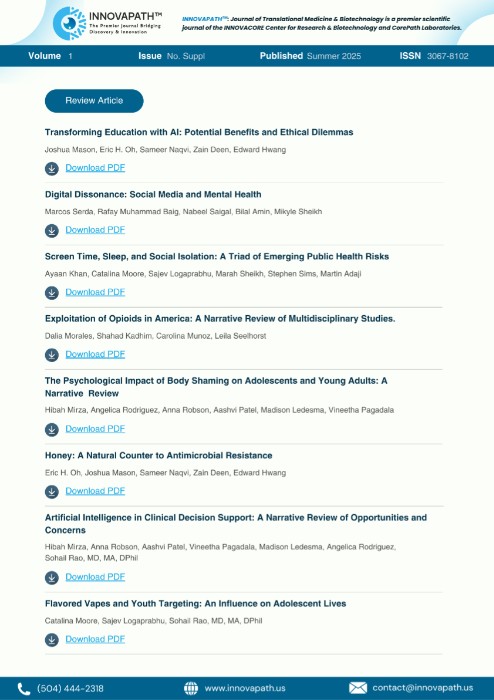
INNOVAPATH, Volume 1, Supplement (Summer 2025): LIgHT-HEALS Integrated Summer Internship Program
8
Published narrative reviews
8
DOIs, one for each article
4 weeks
From research question to manuscript
Open
Access, free for anyone to read
How the Research Came Together
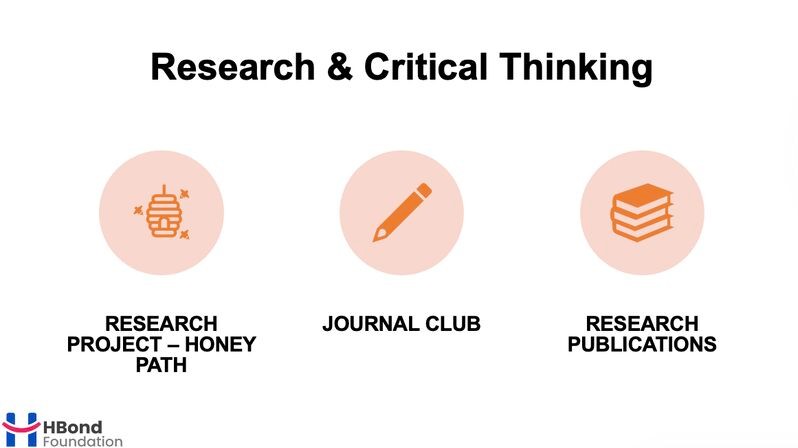
Research and critical thinking form one of the program’s core pillars. Interns took part in a journal club to learn how to read and question published studies, worked on a hands-on research project, “Honey Path”, and then moved on to writing research publications of their own.
Throughout the program, interns were guided by Dr. Sohail Rao, Founding Director of LIgHT-HEALS and Editor-in-Chief of INNOVAPATH, along with mentors from CorePath Laboratories and INNOVACORE. Dr. Rao also co-authored two of the eight reviews with the interns.
The 2025 Publications
Click any article to read the full paper on INNOVAPATH.
Article 1
Transforming Education with AI: Potential Benefits and Ethical Dilemmas
Joshua Mason, Eric H. Oh, Sameer Naqvi, Zain Deen, Edward Hwang
This review weighs how artificial intelligence can close gaps in teaching and learning against the risks of misuse and unequal access. The authors argue for AI that supports traditional learning rather than replacing it.
Article 2
Digital Dissonance: Social Media and Mental Health
Marcos Serda, Rafay Muhammad Baig, Nabeel Saigal, Bilal Amin, Mikyle Sheikh
Drawing on the literature and the team’s own survey, this paper looks at how social media shapes body image and self-esteem in young people, and calls for stronger digital literacy and mental-health support.
Article 3
Screen Time, Sleep, and Social Isolation: A Triad of Emerging Public Health Risks
Ayaan Khan, Catalina Moore, Sajev Logaprabhu, Marah Sheikh, Stephen Sims, Martin Adaji
This review examines how long hours on digital devices are linked to eye strain, poor sleep, social isolation and low mood, while noting that moderate, purposeful use can have benefits.
Article 4
Exploitation of Opioids in America: A Narrative Review of Multidisciplinary Studies
Dalia Morales, Shahad Kadhim, Carolina Munoz, Leila Seelhorst
The authors trace the drivers of the U.S. opioid epidemic, explain how opioids lead to addiction, review key policies, and make the case for pain education and non-opioid treatment for young people.
Article 5
The Psychological Impact of Body Shaming on Adolescents and Young Adults: A Narrative Review
Hibah Mirza, Angelica Rodriguez, Anna Robson, Aashvi Patel, Madison Ledesma, Vineetha Pagadala
Combining a literature review with an online survey, this team explores how common body shaming is among youth and how it connects to negative social media content and to mental and physical health.
Article 6
Honey: A Natural Counter to Antimicrobial Resistance
Eric H. Oh, Joshua Mason, Sameer Naqvi, Zain Deen, Edward Hwang
As antibiotic resistance grows, this review explores why honey’s natural properties make it a promising antimicrobial agent and how it could inform future infection control.
Article 7
Artificial Intelligence in Clinical Decision Support: A Narrative Review of Opportunities and Concerns
Hibah Mirza, Anna Robson, Aashvi Patel, Vineetha Pagadala, Madison Ledesma, Angelica Rodriguez, Sohail Rao, MD, MA, DPhil
This paper reviews how AI can improve diagnosis and reduce medication errors, while flagging concerns about bias, transparency and clinician trust, and recommends ways to adopt it responsibly.
Article 8
Flavored Vapes and Youth Targeting: An Influence on Adolescent Lives
Catalina Moore, Sajev Logaprabhu, Sohail Rao, MD, MA, DPhil
The authors examine how flavors, targeted marketing and peer influence drive teen vaping, outline the health risks of early nicotine use, and call for education, policy reform and youth-focused cessation programs.
Through this work, our interns learned to ask meaningful questions, evaluate evidence, collaborate as a team, and carry an idea all the way to the published literature, building the mindset of servant leadership and using science and knowledge for the public good.